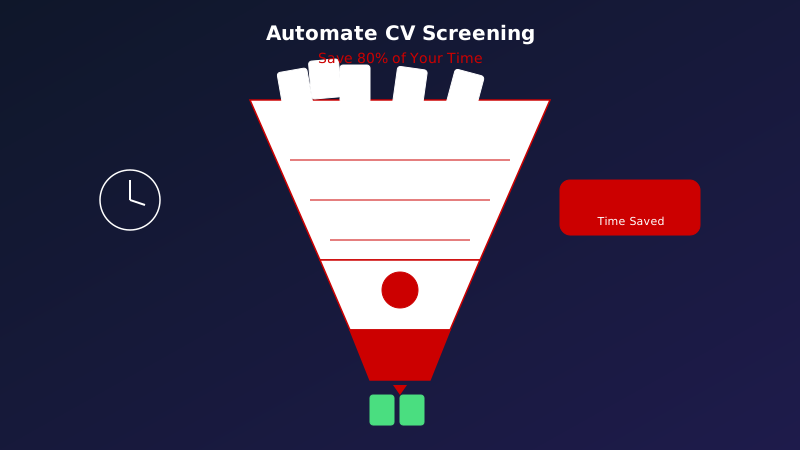
CV Parsing: Automate Application Screening with AI
Recruitment teams often need to review information across CVs in different formats. CV parsing can structure selected fields to support a connected workflow, with recruiters checking the results and making hiring decisions.
This guide outlines what parsing can do, where review is still needed, and how to evaluate an integration for your process.
Why Automate CV Screening?
Considerable Time Saving
Manual CV screening can involve repetitive data-entry tasks. A parsing API integrated into a workflow can structure selected fields from CVs; results and ambiguous cases still need review.
Concrete Example:
A team can use structured data to reduce manual pre-screening work and focus human review on relevant profiles.
Structured Information Needs Human Review
Parsing organizes information found in a CV; it does not by itself remove bias or make an assessment objective. Define job-related criteria, check which fields are used, and review results for errors or unfair patterns.
Candidate workflow steps
Parsing does not send candidate communications by itself. When connected to an ATS or application workflow, structured data may support steps such as:
- Prefilling selected form fields for candidate review
- Making reviewed information available to recruitment staff
- Supporting recruiter searches based on recorded criteria
How Does a CV Parsing API Work?
A parsing API accepts documents through its documented workflow and can return selected information in structured fields, depending on document quality and the supported formats. Review the API documentation for the available fields and processing steps:
Technical and Soft Skills
Example field to review: skills
Professional Experiences
Positions, durations, companies and responsibilities
Education and Degrees
Academic background and certifications
Mastered Languages
Levels of language proficiency
A connected application can map returned fields into an ATS or HR system. The mapping, validation and error handling depend on the integration you build.
Points to check before integrating:
- Confirm that the API endpoints match your workflow
- Plan time to map, test and validate returned fields
- Review the API documentation and support options
What are the Concrete Benefits for Recruiters?
| Advantage | Impact |
|---|---|
| Time Saving | Less manual time spent on initial CV screening |
| Field coverage | Check which information is returned and how uncertain values are represented |
| Candidate-facing workflow | Assess whether any form or communication steps are provided by your wider integration |
| Workflow impact | Measure review time and integration costs in your own representative trial |
| Identification of Rare Profiles | Detection of unique skills or atypical career paths |
How to Choose the Right Parsing API?
To choose your solution well, here are the criteria to consider:
Parsing Accuracy
Assess extracted-information quality on a representative sample of your documents.
Compatibility
Check the API documentation and test the required data mapping
Ease of Use
Intuitive interface and responsive support
Data Security
Review data handling, retention, access controls and your privacy requirements with the appropriate team
Validate the workflow with representative CVs
Compare the returned fields with the source documents, check how exceptions are handled, and involve recruiters in reviewing the results before using them in a live process.
Conclusion: Evaluate CV Parsing for Your Workflow
Before adopting a parsing API, assess the following in a representative trial:
Ready to transform your recruitment process?
Test CVReader for FreeDiscover how to automate CV screening