Resume Parsing Guide: How It Works and What to Check
As a recruiter or HR manager, you know better than anyone: managing applications is a colossal task. You receive hundreds of resumes in different formats, each one containing a wealth of information to be utilized. But how do you turn this avalanche of unstructured data into a clean, usable, and intelligent database? That’s where resume parsing comes in.
This guide explains what parsing is, when structured candidate data can be useful, and how to evaluate a tool against your workflow.
1. What is Resume Parsing?
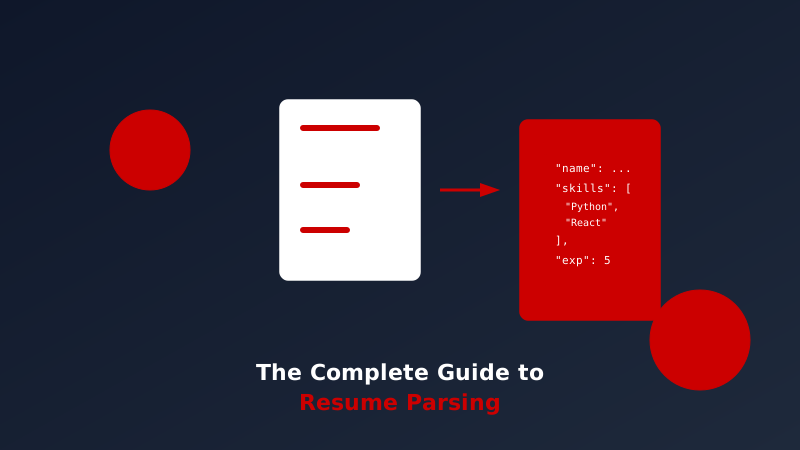
Resume parsing extracts selected information from a resume — for example contact details, work experience, education or skills — and returns it in a structured format. Check the provider's documentation for supported file types and output fields. An integration can map the response into an applicant tracking system (ATS) or database, with validation and error handling appropriate to your workflow.
Resume parsing can be one step in an application-processing workflow. The output may need review and correction before it is stored or used by another system.
2. When Can Resume Parsing Be Useful?
A parsing tool may be useful when a team needs to structure information from incoming resumes. Consider how it fits your process:
Repetitive data entry
A parsing tool can reduce some repetitive data entry. Check the extracted fields and account for manual review, especially when documents contain missing or ambiguous information.
Candidate-facing steps
A parsing integration may prefill selected application fields, depending on how it is built. Let candidates review and correct information, and assess the effect on your application workflow.
Enrichment of Your Resume Database
Parsed fields can be stored in a connected system if the workflow is configured to do so. Check what information is retained, how it is validated and which searches your system supports.
Search using stored fields
If your ATS or database supports field-based search, structured information may help staff filter profiles by fields such as experience, skills or education. Check the available fields and review search results before acting on them.
3. How to Choose the Right Resume Parsing Tool?
Compare tools against your documents, workflow and requirements. These are useful criteria to evaluate:
| Criterion | Importance | Things to Check |
|---|---|---|
| Accuracy and Performance | High | Test the fields you need across representative resume formats and record missing or incorrect values. |
| Speed | High | Test response times and batch limits with the volume and integration pattern your workflow requires. |
| Integration and API | High | The tool should integrate easily with your existing systems (ATS, CRM, etc.). A well-documented REST API is a major asset. |
| Supported Languages | Medium to High | If you hire internationally, make sure the tool supports multiple languages and handles cultural specifics. |
Example to evaluate: CVReaderPro
CVReaderPro documents a REST API and structured-data examples. Test its responses with your own resumes and criteria, then check the results before integrating them into your workflow.
Conclusion: Choose a tool that fits your workflow
Resume parsing can help structure information for later review and search. Evaluate the output, integration requirements and review steps against your recruitment process before choosing a tool.
Ready to transform your recruitment process?
Try CVReader for FreeReview the API and pricing details to see whether the workflow fits your needs.